
Home

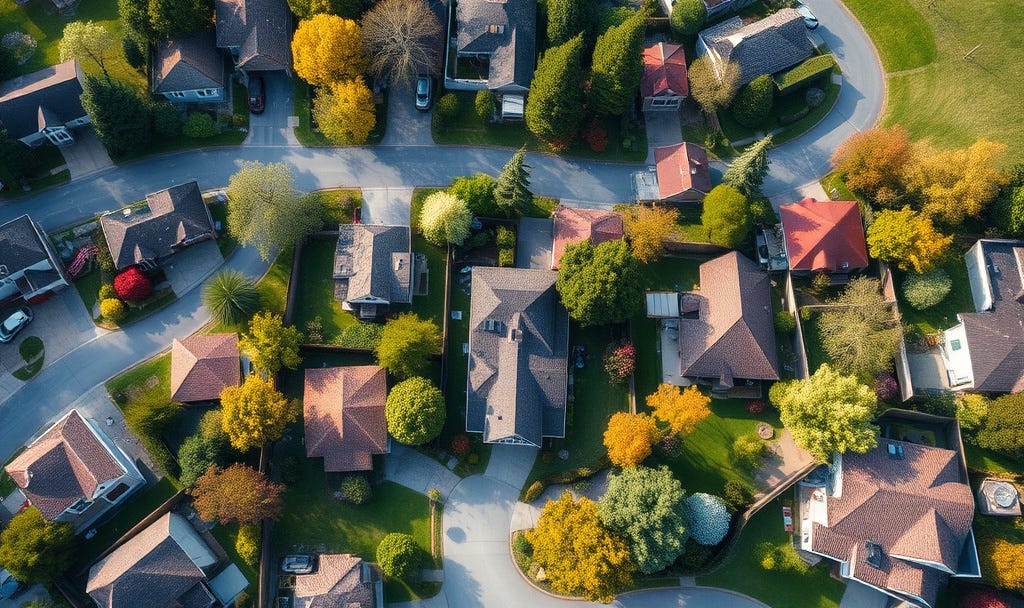
With the goal of diverting attention from the War in Iran, instead, we will turn toward what, for many, is a space reminding us of our own deepest values and hopes and the inspiration to realize them. To me, this is especially true in times of stress. And the space? Home.
No matter what place you call home, the very word strikes a chord deep inside each of us. Home means sanctuary, the place we can rest, relax, enjoy time with friends, learn, grow … and just be. Other sa words I could include are safety and sanitorium.
Our homes say a lot about who we are and what we think is important in life. Let’s begin at the beginning. What are your early memories of home? For most of us those memories are experiences. Some of mine are feelings of loneliness broken by visits from visitors often bearing gifts (often beautiful clothing from aunts who were childless), the smell of cooking when my maternal grandmother came to stay (my own mother definitely not a cook and an early adopter of the ‘TV dinner’), creaking floorboards, an expansive porch which seemed to me to be a bulwark against ‘bad things’ that might be lurking in the world, (finding a large dead crow), the surrounding gardens, curtains billowing around open windows and dogs who were not allowed to live inside. What are yours, Dear One?
A psychoanalyst is not needed in order to correlate those early experiences with who I am today: a woman who believes food is love, a belief dogs deserve to share one’s surroundings, a love of old houses, large porches or at least a deck, curiosity about the lives of birds, and gifts (mine to Others as well as the gift of trust from former clients.) Does this make sense? Try that exercise and if comfortable, please share some of your results.
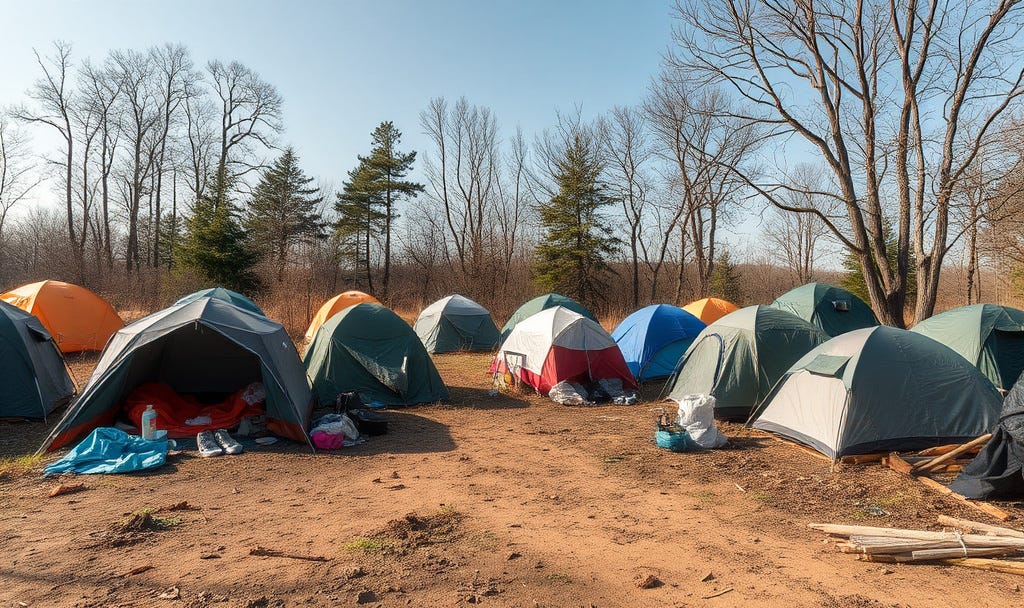
Robert Frost once wrote, “Home is the place where, when you have to go there, they have to take you in.” Hopefully. On the other hand, we are well aware of the prevalence of homelessness, either encampments or ‘couch surfing’. To be without a stable home is to be denied not just comfort but grounding and belonging. Without a place to rest safely, the nervous system cannot truly relax. Vigilance become constant. And life is lived in the realm of necessity, never in the realm of choice. The person without a home must think of the immediate future; the person with a home can think of next year.
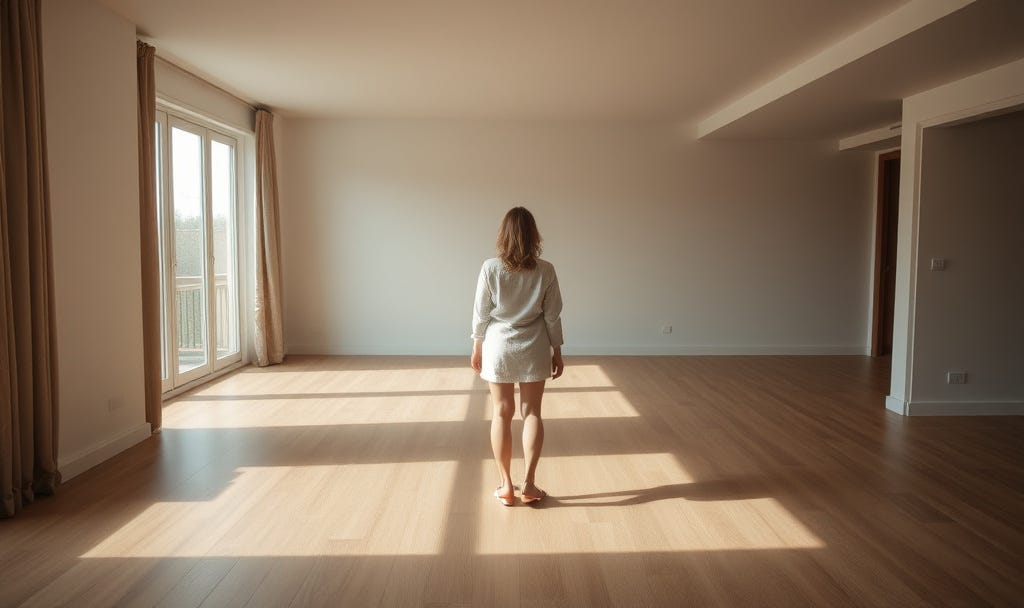
At its most literal, a home is a building. Four walls, a roof, an address. But anyone who has moved knows the strange melancholy of standing in an empty apartment that used to be theirs — the same floor plan, the same windows catching the same light, and yet something entirely gone. The walls remain; the home has left. This tells us that home was never really the structure at all.
Home is, above everything else, a feeling. It is the particular ease that settles into your body when you cross a threshold and know, without thinking, that you belong there. Psychologists call it place attachment — the emotional bonds we form with specific spaces — but that clinical phrase barely captures the reality: the way a childhood kitchen’s smell can transport you instantly across decades, or how a particular chair becomes yours in a way no deed of ownership could fully explain.
Home matters so profoundly because it is one of the few places where we are permitted to be fully ourselves. In most of the world, we perform. We calibrate our words, our posture, our laughter to the expectations of others. Home, at its best, is the reprieve from that performance. It is where you can be unremarkable without consequence — where you can sit in silence, eat the strange food you love, move through space without narrating or justifying yourself.
The philosopher Gaston Bachelard, in his luminous Poetics of Space, argued that the house is our “first universe” — the original container of our inner life. We do not just live in a home; we think through it. Our memories are housed in rooms. Our sense of self is partly constructed from the spaces that held us when we were becoming who we are. This is why the loss of a childhood home can feel like a small death, even in adulthood — because something that was not merely sentimental but structural to identity has been removed. This, I believe is true, whether or not our childhood home was the container of happy memories.
Similarly, the forced displacement of peoples — through war, colonization, or economic desperation — represents one of the deepest wounds a community can suffer. The longing of diasporas for homelands, sometimes across generations, reveals how home is not just personal but collective. Cultures carry home inside them: in language, food, ritual, story. These become the portable architecture of belonging when geography is taken away.
Home is also fundamentally about safety. Not only physical safety — though that is no small thing — but the deeper safety of being known. To feel at home somewhere is to feel that you do not have to explain yourself, that your presence requires no justification, that you are wanted in your wholeness rather than tolerated in your usefulness.
This is why homesickness is such a particular ache. It is not really a longing for a place but for a feeling — the feeling of mattering to a context, of fitting inside a set of relationships and rhythms that recognize you. And it explains why some people feel more at home in a foreign city than in the town where they grew up: home follows belonging, not geography.
And there is the question of who gets to feel at home in public space — in neighborhoods, institutions, countries. To feel perpetually out of place in the world you inhabit is its own form of homelessness, an exclusion that leaves no visible address but is felt in the body every day.
Home, finally, is not only found but made. It is an ongoing act of creation. We arrange objects to reflect who we are. We establish rhythms — the morning coffee, the Friday meal, the accumulated traditions — that transform time into something habitable. We return, again and again, to the same people and places until the returning itself becomes a form of love.
This making is one of the most ordinary and most profound things human beings do. In tending a home, we are asserting that life is worth the effort of care, that the small dailiness of existence — the folded blanket, the kept appointment, the lit lamp in the window — matters. I am neurotically neat and organized and truly do not judge those who are not. And yet, a chaotic mess of a home does, I believe, says something about the inner emotional state of the inhabitant. Home is the argument, made in practice, that we belong here, that the world has a place for us, and that we intend to inhabit it fully.
In the end, home is nothing less than the spatial form of love: a place where you are known, where you matter, where you can rest. Its importance lies not in what it contains but in what it makes possible — the capacity to go out into the world and face it, because somewhere, something is waiting for your return.
If Home is a topic which you would like to explore further, I wholeheartedly recommend ‘Homing’ on YouTube hosted by Matt Gibberd, a series of conversations writers, thinkers, designers, and architects.
And the catalyst for the topic of this week’s post is my soon-to-be experience of relocating twice in 3 weeks for 6 days each time. A hotel suite with a kitchen, heated pool and hot breakfast is not nothing but it’s certainly not home.
I’ll end with a favorite Wallace Stevens poem, “The House was Quiet and the World was Calm”:
“The house was quiet and the world was calm.
The reader became the book; and summer night
Was like the conscious being of the book.
The house was quiet and the world was calm.
The words were spoken as if there was no book,
Except that the reader leaned above the page,
Wanted to lean, wanted much most to be
The scholar to whom his book is true, to whom
The summer night is like a perfection of thought.
The house was quiet because it had to be.
The quiet was part of the meaning, part of the mind:
The access of perfection to the page.
And the world was calm. The truth in a calm world,
In which there is no other meaning, itself
Is calm, itself is summer and night, itself
Is the reader leaning late and reading there.”
Copyright Credit: Wallace Stevens, “The House Was Quiet and the World Was Calm” from The Collected Poems of Wallace Stevens. Copyright © 1954 by Wallace Stevens and copyright renewed 1982 by Holly Stevens.
Please don’t forget to include your comments, Dear One.
Thank you Frances for this lovely post
Home for me is that glorious first cup of tea in the morning, just sitting , being immersed in a book, the animal companions I share a home with, feeling warm, dusk , also a well crafted series on the television
Such a deep and layered subject, Frances. The other night I had a dream in which I was in my childhood home, and felt lucky when I awoke, and also in awe of how the brain can summon such detail (e.g, how the light entered a specific entry) after 55 years away. Your reflections underscore why I've never liked to live in newly-built homes— no patina of life and the echoes of another time. I now live with a number of pieces from that home, and those are a comfort to me, the last survivor of my small original family. re "being yourself at home", that was not quite my experience as there were pretty rigid social conventions. I bided my time until I could attend a university far enough away to live more freely. In a way, I was lucky to hit the exact moment in the '60s when I could consider who I was while at school, and the conformist when home.